More than a power curve
Average power and normalised power are useful summaries, but they do not explain how a particular load was produced. Bespoke analysis examines power together with heart rate, cadence, speed, terrain and — where available — cycling dynamics.
A particular strength of the service is athlete-specific analysis of Cycling Dynamics data, an area for which other platforms offer limited support.
What can be examined?
Different power meters
Data from different power meters can be analysed separately or compared directly where the conditions support a meaningful comparison.
Flat and uphill, seated and standing
Flat and uphill sections, and seated and standing efforts, can be compared when the data makes them reliably distinguishable. This allows the analysis to examine not only differences in power, but also pedalling patterns or changes in left–right balance.
Bikes, positions and equipment
Where the bike, position or equipment can be identified reliably, similar efforts can be compared. Differences in route, weather, fitness and other confounding factors must be considered when interpreting the result.
Cycling Dynamics
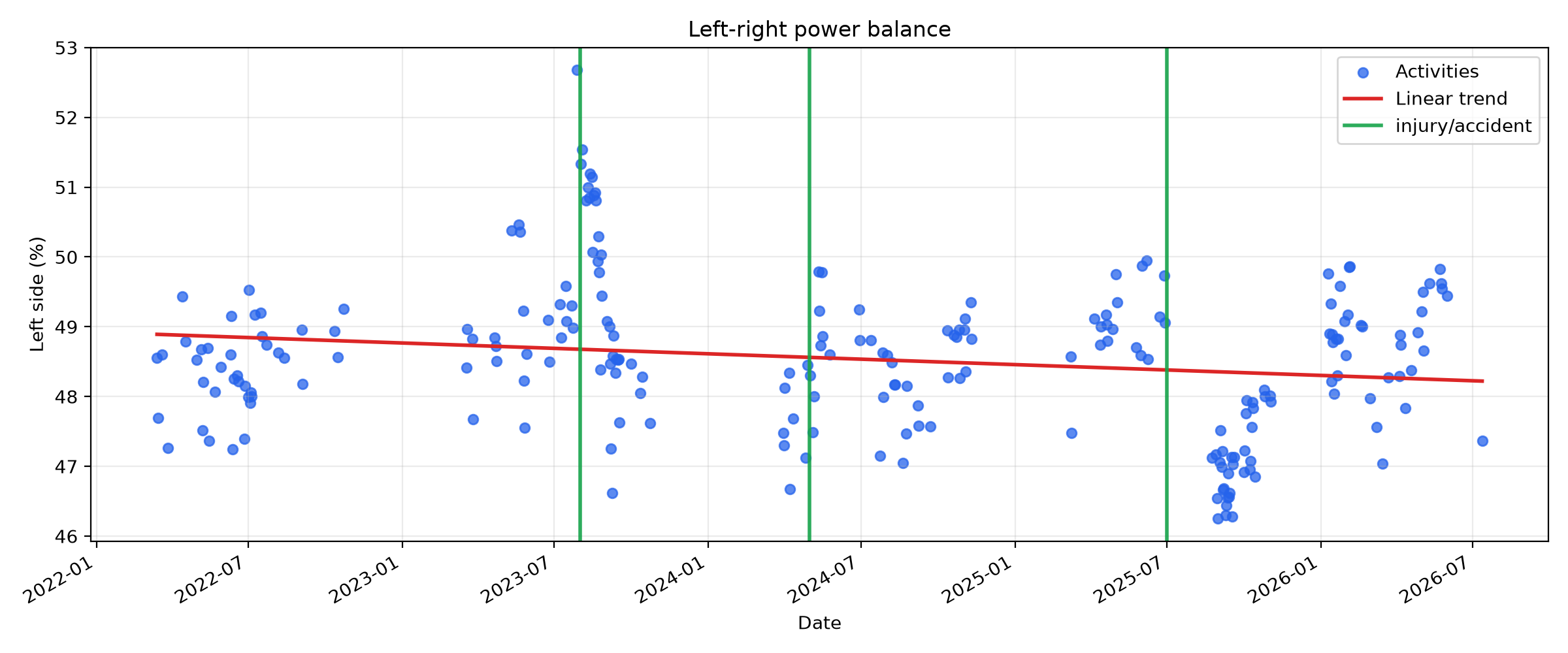
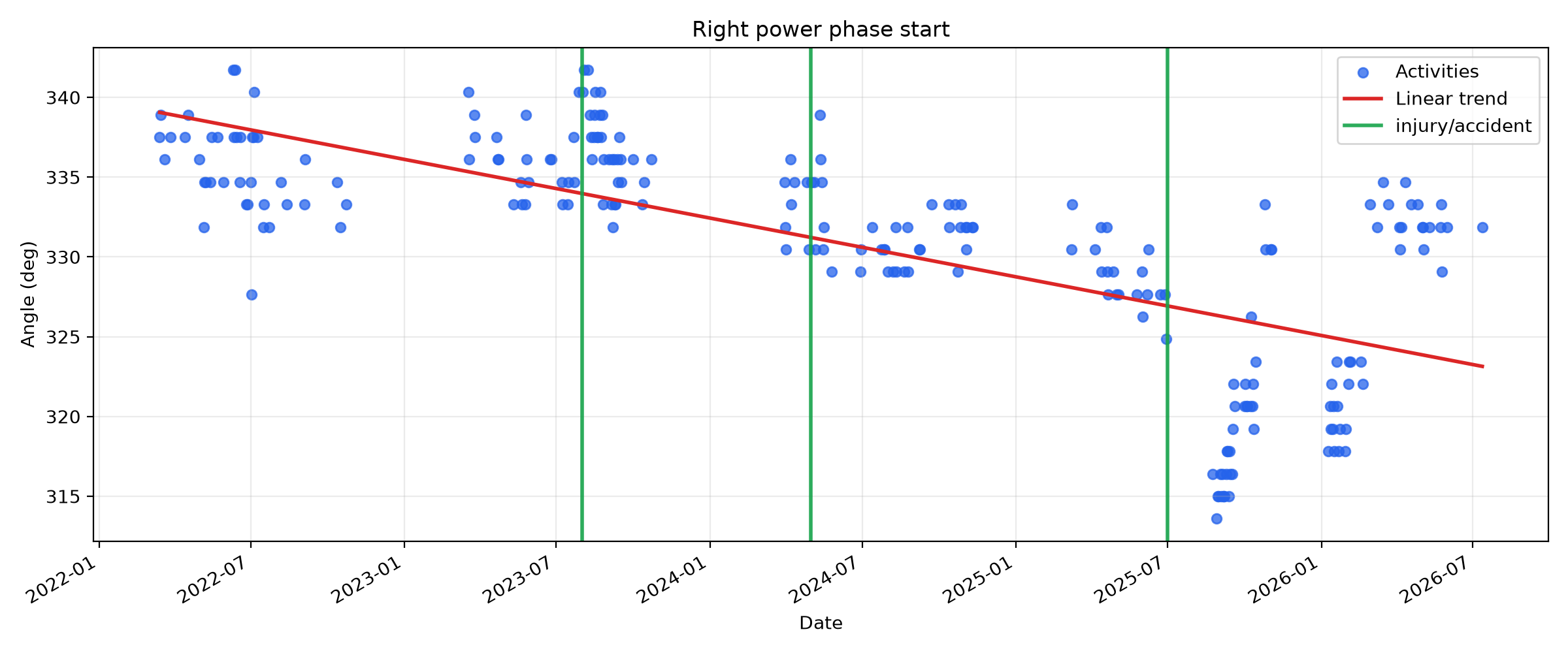
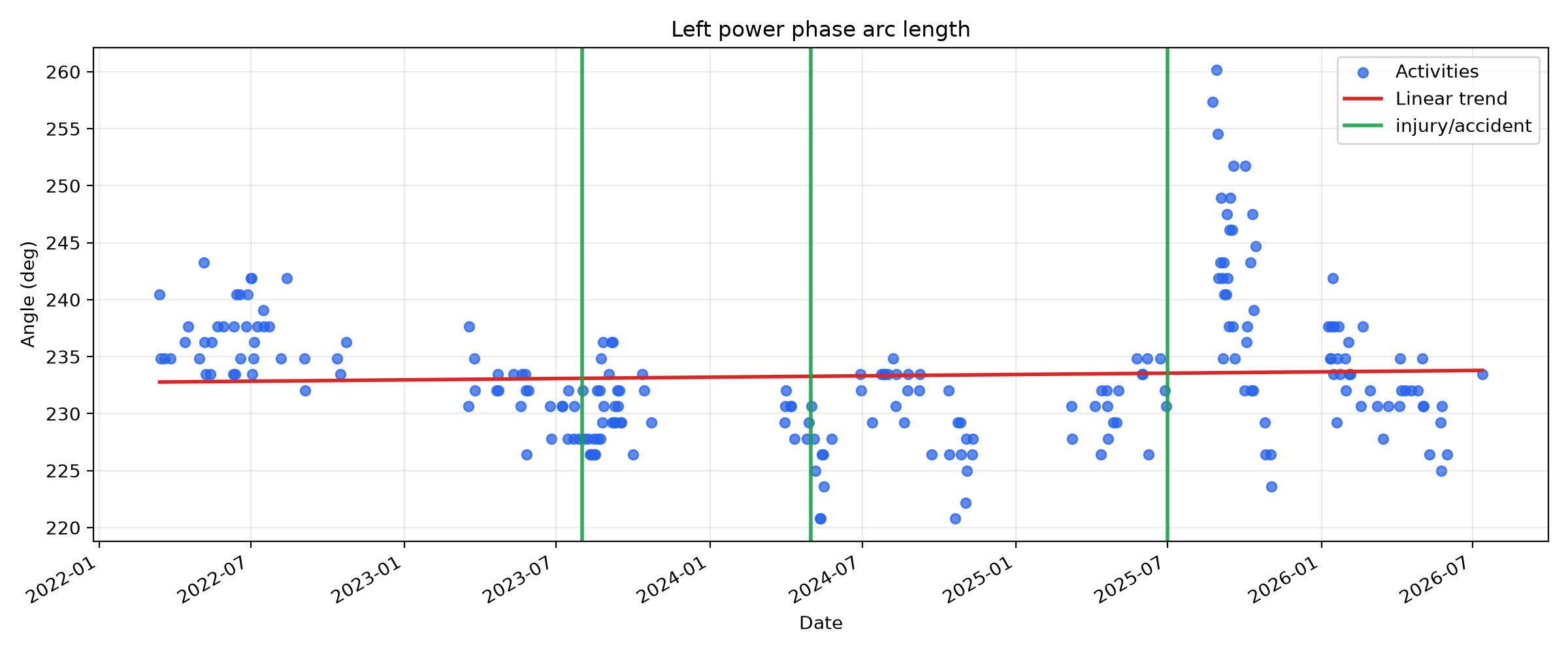
With a compatible dual-sided power meter, the analysis may include left–right balance, torque effectiveness, pedal smoothness, power phase, peak power phase and other Cycling Dynamics fields. These can be examined longitudinally, by cadence or power range, and around recorded events. For example, it may be possible to investigate how a position change, cleat adjustment or injury affected these metrics within a given power range or other filter.
What questions can cycling performance analysis address?
- How does the power–heart rate relationship change between training periods?
- How are cadence, heart rate and power related?
- At what intensity does pedalling efficiency or dynamics begin to change?
- How does the pattern of seated power differ from standing power?
- Does left–right balance remain stable across different load levels?
- Can the effect of changing a bike, position or equipment be detected?
- After injury or an accident, when do the metrics return to their previous ranges?
What is needed for the analysis?
The original FIT files from the training sessions or races being examined, plus the context relevant to the question. Useful details may include the bike, power meter (although this is normally recorded in the FIT file), position, purpose of the effort and the periods to be compared.
The depth of the analysis depends on the data genuinely available in the FIT files. Cycling Dynamics fields, dual-sided balance and seated–standing position are not recorded by every device. Missing data is neither assumed nor generated artificially.
The result is an analysis of sports performance data, not a medical diagnosis, and it does not guarantee improved performance.