More than faster or slower
Average pace alone says little about how a performance was produced. The same pace can be associated with different heart rate, power, cadence or ground contact time. Bespoke analysis identifies comparable segments and sessions, then examines the variables together.
The result is not a set of generic running-technique rules, but observations that can be supported by your own data.
What can be examined?
Longer periods and training blocks
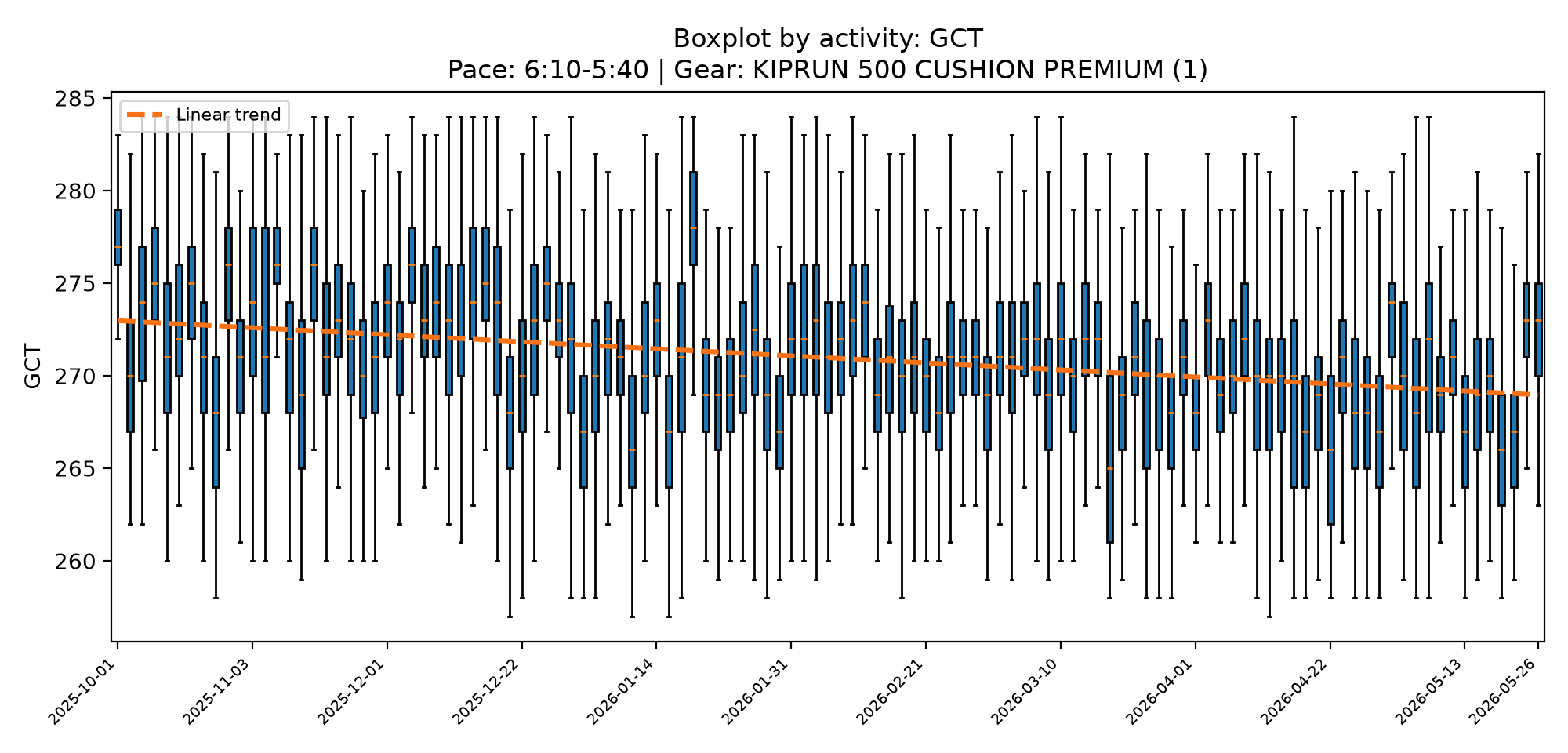
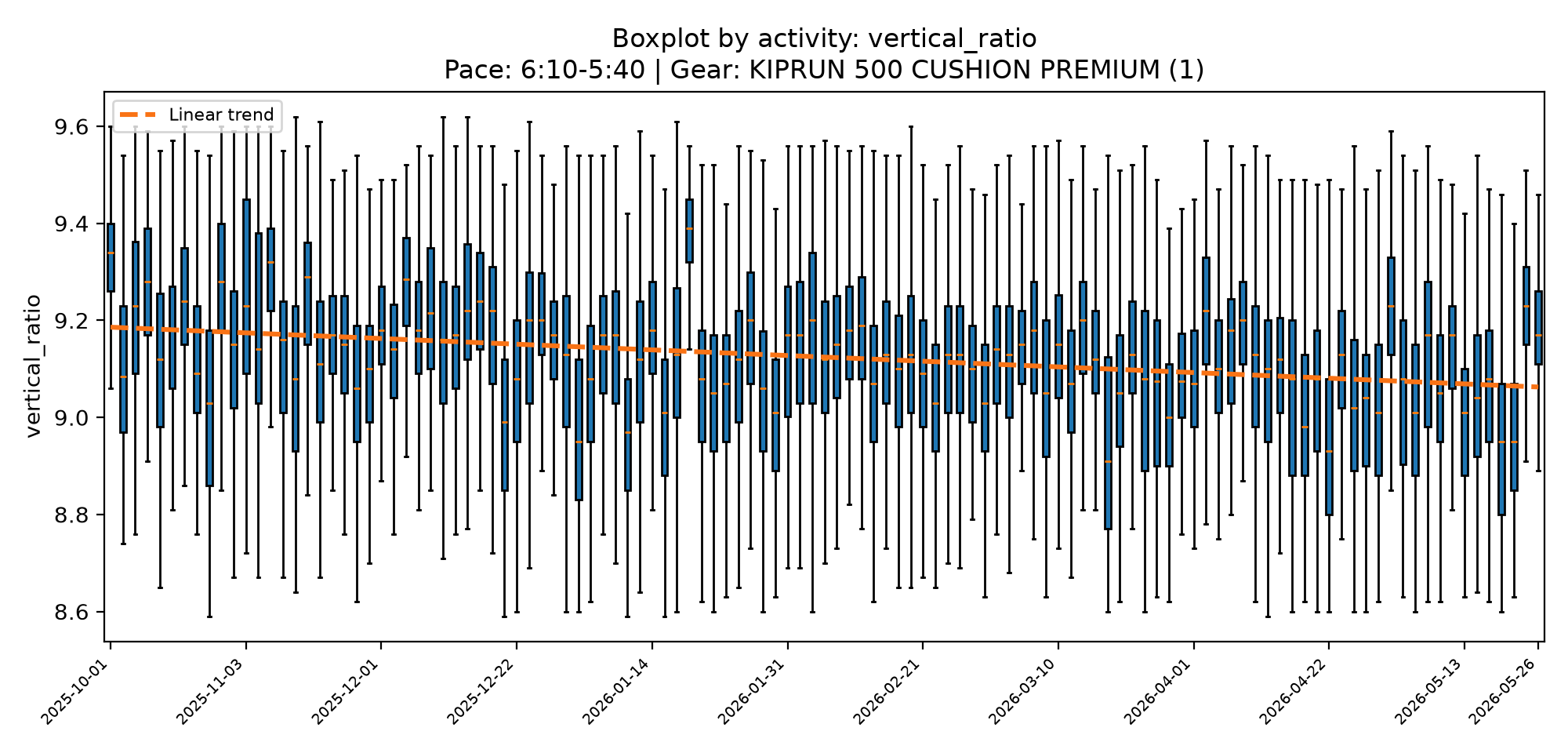
Runs across several weeks, months or seasons can be compared under consistent conditions. The analysis may ask, for example, whether heart rate, power or a running dynamics metric has changed within the same pace range, and how consistently that change appears.
Fatigue and drift
The beginning and end of long runs, steady sections or repetitions can be compared. The purpose is not merely to see whether heart rate rose, but to examine whether pace, stride length, cadence, ground contact time or another recorded metric changed with it.
Intervals, tests and races
Comparing repetitions can show when the sustainability of performance or running form begins to change. Test sessions and races on similar routes can reveal what remained stable and where differences emerged.
Comparing shoes and conditions
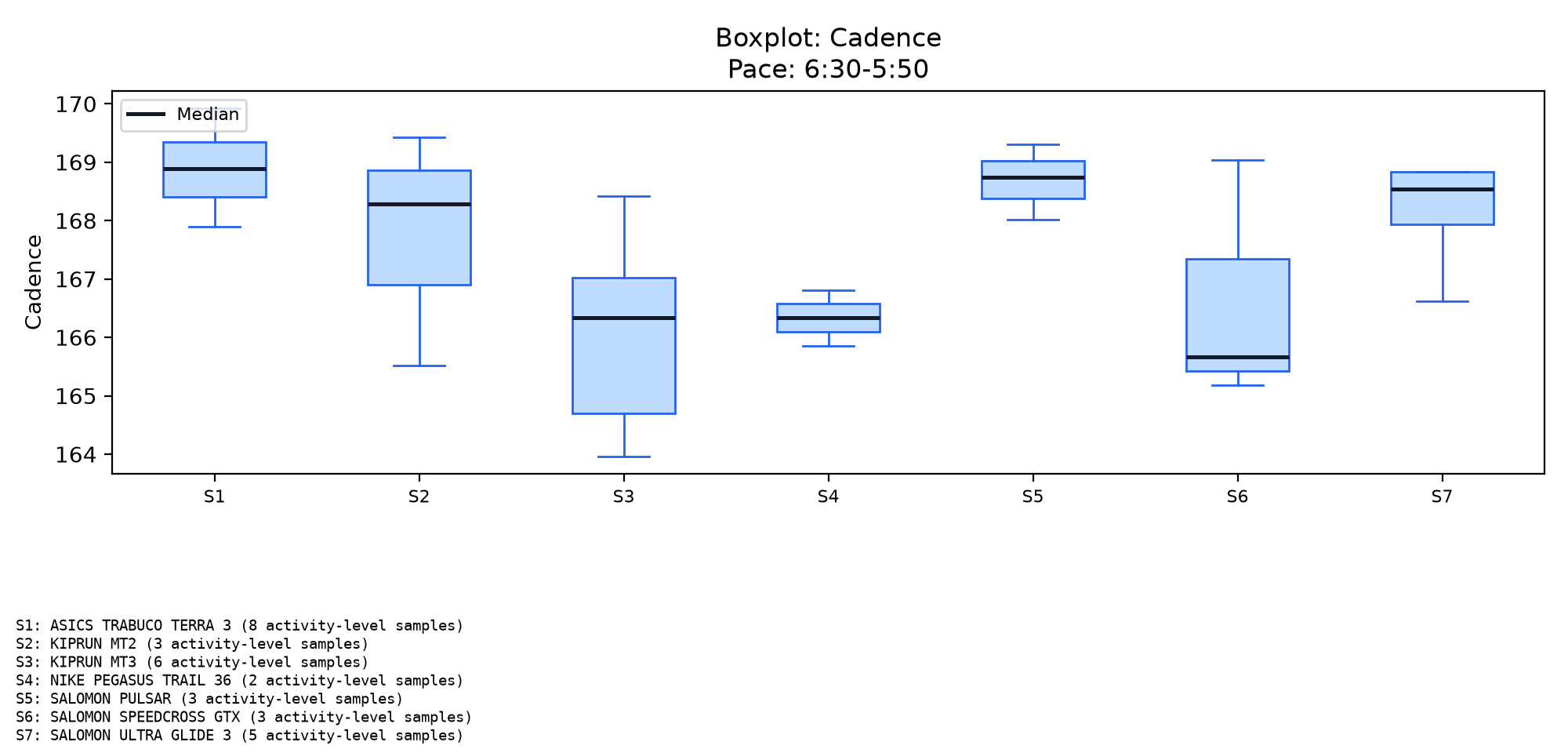
Different shoes can be compared within the same pace or power range. Where the files and conditions allow, the analysis can also examine whether metrics behave differently on flat, uphill and downhill terrain.
Running dynamics by speed
Cadence, stride length, ground contact time, vertical oscillation, vertical ratio, ground contact time balance and other fields are not independent judgements of quality. They become more informative when considered together and related to pace, power and terrain.
What questions can running data analysis address?
- In which shoe do I run more economically within the same pace or power range?
- How do heart rate, cadence and ground contact time change at the same pace over a longer period?
- Which metrics begin to deteriorate first near the end of long runs?
- Does my running form change differently on flat, uphill and downhill terrain?
- Did a new training block produce a measurable, repeatable change?
- During which interval repetition does a change in movement first appear?
- How large is the difference between running dynamics recorded at the wrist and by a chest strap?
- To what extent do running dynamics parameters change when running with a backpack (or weight)?
What is needed for the analysis?
The original FIT files from the runs being examined, together with relevant context such as shoes, training purpose, terrain, return from injury or the timing of a training block.
The available analyses depend on the device and the data it recorded. Not every FIT file contains power, running dynamics, left–right balance or accurate elevation. Findings are based only on fields that are genuinely available and of suitable quality.
The analysis evaluates sports performance data; it does not replace a medical, physiotherapy or other clinical assessment.